

Short version: Does creatine affect sleep? Not in a bad way, based on the trials so far. In a 2024 study, 21 women took 5 g a day for 6 weeks and slept longer on the days they lifted. No human trial has found that creatine causes insomnia. If you feel wired at night, check your tub for caffeine first.
- Keep: 3 to 5 g a day, at whatever time you will remember.
- Check: the label for caffeine, often hidden in pre-workout blends.
- Switch: to a morning dose if nights feel restless.
Last updated November 2026.
You started taking creatine a few weeks ago, and now you are staring at the ceiling at 1 a.m., wondering whether the two are connected.
It is a reasonable question. Creatine helps your cells produce energy, and "energy" sounds like the last thing anyone wants at bedtime.
Here is what the sleep studies actually measured, where the worry came from, and what to change if your nights feel off.
Does creatine affect sleep?
Yes, a little, and the effects measured in people so far range from neutral to slightly helpful. None of the human trials below found worse sleep.
Three small, randomized trials have tracked sleep while people took creatine:
- Women who lift. 21 women took 5 g a day or a placebo for 6 weeks and trained twice a week. A sleep ring showed more total sleep on training days in the creatine group. Their overall sleep-quality score did not change. See Aguiar Bonfim Cruz et al. (Nutrients, 2024).
- Active men on a loading dose. 14 men took 20 g a day for 7 days. They gave their sleep a higher quality rating. A wrist tracker showed no change in how fast they fell asleep or how long they slept. See Ben Maaoui et al. (Nutrients, 2025).
- Women in perimenopause. 51 women did six weeks of strength training. The creatine group had a more regular sleep pattern than the placebo group, by 7.4 percentage points. The authors call it an early, exploratory finding. See Baker et al. (Eur J Appl Physiol, 2026).
Those are small groups, and each used a different sleep measure. So read them as "no sign of harm," not as proof that creatine is a sleep aid.
What do the creatine and sleep studies show, side by side?
Here is every study in this article, including the animal research and a population survey, summarized in one place for easy comparison.
| Study | Who and how much | What happened to sleep |
|---|---|---|
| 2024 trial | 21 women, 5 g a day, 6 weeks | More sleep on lifting days |
| 2025 trial | 14 men, 20 g a day, 7 days | Felt better rested; sleep time unchanged |
| 2026 trial | 51 women in perimenopause | More regular sleep pattern |
| 2025 survey | 5,988 US adults, food only | Fewer sleep complaints with more creatine |
| 2017 rat study | Rats, 4 weeks | Less sleep during their rest hours |
Can creatine cause insomnia?
No clinical trial in people has shown it. Some users do report restless nights, though, so it is worth understanding the possible reasons.
The "creatine keeps you awake" idea has a real source. In a 2017 study, rats fed creatine for 4 weeks slept less during their normal rest hours. Their brains also built up less of the chemical signal that makes you sleepy. See Dworak et al. (J Sleep Res, 2017).
Rats are not people. They are active at night and sleep during the day, and the dose was not matched to a typical human serving. The human trials above did not see the same drop.
A US survey points the other way. Among 5,988 adults, people who ate less creatine from food reported trouble sleeping more often, 23.7% compared with 19.3%. See Baltic et al. (Nutr Health, 2025). That shows a link, not cause and effect.
Why might you sleep worse after starting creatine?
If your sleep changed, consider what else in your routine changed at the same time. Three explanations come up most often.
- Caffeine in the tub. Many pre-workout blends pair creatine with caffeine. In one sleep lab study, 400 mg of caffeine taken even 6 hours before bed disturbed sleep. See Drake et al. (J Clin Sleep Med, 2013). The FDA puts 400 mg a day as the level most healthy adults can have without trouble. See the FDA caffeine page.
- A late, hard workout. New training often starts at the same time as creatine. An evening session can leave you buzzing.
- A big loading dose. 20 g a day can upset some stomachs. Our guide to creatine loading side effects covers this, and you can skip loading entirely.
Plain creatine monohydrate has no caffeine. If your label lists caffeine, green tea extract, guarana, or "energy blend," that is the first thing to change. Our post on mixing creatine with coffee or pre-workout has more.

Should you take creatine at night?
You can. Consistent daily use matters far more than the specific time of day.
A 2021 review by creatine researchers says creatine keeps working as long as your muscles stay topped up. That happens with daily use, not with a set time on the clock. See Antonio et al. (JISSN, 2021).
So choose the time you are least likely to forget. If you sleep well, an evening dose is perfectly reasonable. If you feel restless, move your dose to breakfast for two weeks and see if anything changes.
Our guide on taking creatine before or after a workout goes deeper on timing.
How does creatine change brain ATP?
ATP is the energy molecule your cells spend. Creatine helps your body rebuild it quickly, in muscle and in the brain.
Staying awake gradually drains that energy supply. In a 2024 brain-scan study, people kept awake for 21 hours took one large dose of creatine, 0.35 g per kg of body weight. Scans showed shifts in brain energy markers, and they did better on thinking tests than people on placebo. See Gordji-Nejad et al. (Sci Rep, 2024).
That dose is unusually large. For a 140-pound woman it works out to about 22 g at once, far above the typical daily 3 to 5 g. Do not copy it at home.
This same energy role is likely why creatine is studied for memory and focus. Our post on creatine for brain health covers that research.
Can creatine help cognition after sleep deprivation?
Early studies suggest it may soften the impact. They do not suggest it can replace sleep.
- A smaller single dose, 0.2 g per kg, still reduced the drop in thinking scores during 21 hours awake, by up to 12%. Women benefited more than men on some tests. See Gordji-Nejad et al. (Nutrients, 2026).
- People who took 20 g a day for 7 days held up better on mood and reaction-time tests after 24 hours awake. See McMorris et al. (Psychopharmacology, 2006).
- A 2026 review found only 5 studies on this. It calls the trend positive but the research sparse. See Williams et al. (J Integr Complement Med, 2026).
New parents and shift workers may find this hopeful. Still, the real fix for a short night is more sleep, not a bigger scoop.
What should you do if you sleep badly on creatine?
Work through this short checklist before you decide to quit.
- Read the label. Swap any caffeine blend for plain monohydrate.
- Move the dose. Take it in the morning for two weeks.
- Drop the load. 3 to 5 g a day works without a 20 g start. See whether you need a loading phase.
- Check your training time. Finish hard workouts a few hours before bed if you can.
- Look at your cycle. Sleep often dips before a period. Our post on sleep before your period explains why.
Still sleeping badly after that? Stop for two weeks and compare. If poor sleep lasts beyond a few weeks, talk with your clinician. Ongoing insomnia has many causes worth checking.
Ask a clinician or pharmacist first if you have kidney disease, are pregnant or breastfeeding, or take prescription medicines. Our creatine and medications guide covers common ones.
Is creatine helpful for sleep in perimenopause?
It is an early area of research, and it is worth watching. Sleep often becomes more interrupted during your 40s.
The 2026 trial above was in perimenopausal women. Creatine plus strength training was tied to a more regular sleep pattern, measured by a wrist tracker. It was one small study, so treat it as a lead, not a promise. See Baker et al. (2026).
Our creatine for perimenopause guide covers muscle, mood, and brain fog too.
Where Seya fits, honestly
Right now we sell a fiber gummy that supports regularity. That is our only product.
A Seya creatine gummy is coming January 2027. You cannot buy it yet, and we are not naming a dose or price before the recipe is locked.
Shopping today? Plain monohydrate at 3 to 5 g a day is the version studied above. Creatine is not a sleep medicine and is not a treatment for insomnia. Treat this page as education, not medical advice. New to creatine? Start with what creatine is and what it does.
These statements have not been evaluated by the Food and Drug Administration. This product is not intended to diagnose, treat, cure, or prevent any disease.
Frequently asked questions
Does creatine affect sleep?
Slightly, and not badly in the trials so far. A 2024 trial in 21 women found more sleep on lifting days with 5 g a day. No human study has shown worse sleep.
Can creatine cause sleep issues?
Plain creatine has not caused sleep problems in human trials. A rat study found less sleep. In people, caffeine in pre-workout blends is the more likely cause.
Can creatine keep you from sleeping?
Not on its own, based on current studies. If you feel wired at night, check the label for caffeine and try a morning dose for two weeks.
Does creatine improve sleep quality?
Maybe a little. Men on a loading dose gave their sleep a higher rating, and women in perimenopause slept on a more regular schedule. The studies are small.
Should you take creatine at night?
You can. Taking it every day matters more than the hour. If nights feel restless, switch to the morning.
How does creatine change brain ATP?
Creatine helps your cells rebuild ATP, their main fuel. During 21 hours of sleep loss, one large dose shifted brain energy markers in a 2024 scan study.
Can creatine help cognition after sleep deprivation?
Early studies suggest it softens the drop in focus and reaction time. A 2026 review found only 5 studies, so it is no replacement for sleep.
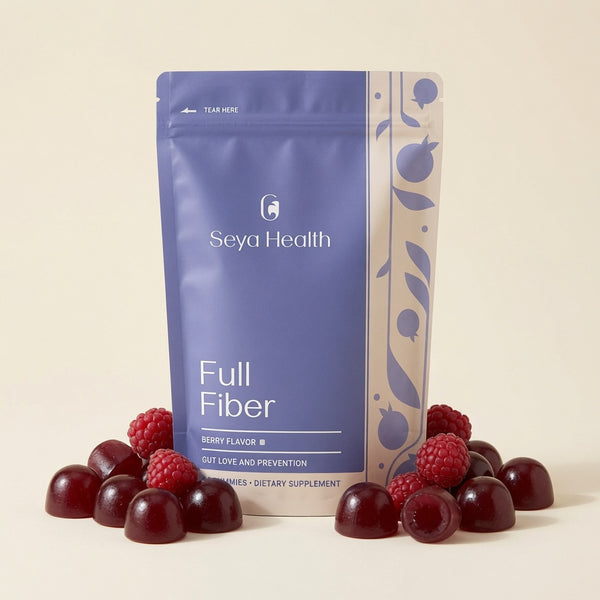
Seya Full Fiber
Most women fall short on fiber. Seya Full Fiber gives you 6 grams from three fibers in three small vegan gummies. Plant based, no gelatin, no sugar alcohols.
Shop Full FiberKeep reading

bone health
Best supplements for women over 40: what the evidence supports for heart, bones and muscles (and what's hype)

creatine
How long does creatine take to work? A realistic timeline for women

constipation