
Home/ The Journal/ appetite
appetite
How Fiber Gummies Work — And What Fiber Really Does for Your Appetite

Short version: Fiber gummies are a small, chewable dose of concentrated fiber. Once you swallow one, that fiber does what all fiber does. It slows your stomach, feeds your gut bacteria, and can turn the volume down on appetite. The effect is real but modest, and it depends on dose.
- The FDA target is 28 g of fiber a day. The average woman gets about 15 g.
- In a review of trials, thick, gel-forming fiber cut appetite in 59% of comparisons, versus 14% for thin fiber.
- In one study, 10 g of a colon-delivered fiber raised two fullness hormones and dropped how much people ate.
Last updated August 2026.
A fiber gummy is a small, chewable dose of concentrated fiber. No powder. No shaker. No gritty glass to choke down.
Fiber gummies work by handing you fiber your food left out. And once you swallow them, that fiber does the same job any fiber does. It does not get digested. It slows your stomach, feeds the bacteria in your gut, and gently leans on your appetite.
Here is the number that frames the whole thing. The FDA says you need 28 g of fiber a day. The average American woman gets about 15 g, and only about 5% of us hit the target at all, per a fiber-intake review in the American Journal of Lifestyle Medicine.
That gap is the real story. So what does a gummy actually do about it, and what does fiber really do to your appetite? Short answer below.
How do fiber gummies actually work?
The gummy is just the delivery truck. The fiber is the cargo.
A gummy packs a measured amount of fiber into something you chew. That is the whole point of the format. No mixing, no texture to gag on, one small thing you will actually remember to take.
Once it is inside you, the format stops mattering and the fiber takes over. Soluble fiber pulls in water and turns into a soft gel. That gel slows digestion. Insoluble fiber does the opposite job, adding bulk and moving things along. MedlinePlus lays out both mechanisms plainly.
Seya's gummy uses resistant tapioca fiber, a fermentable fiber your gut bacteria eat. We break that ingredient down in what resistant tapioca starch is.
Does fiber actually curb your appetite?
Sometimes. And it depends heavily on the type of fiber.
The thick, gel-forming kind is the one that reaches your appetite. A systematic review of controlled trials sorted fibers by how viscous they are. Viscous fibers reduced appetite in 59% of comparisons, versus 14% for thin, watery fibers. For how much people ate right after, the gap was 69% versus 30%. See the review of dietary fiber, appetite, and energy intake in Obesity Reviews.
So fiber can quiet appetite. Not every fiber, not every time, and not by a lot. This is a lever, not a switch.
That 3pm pull toward the kitchen, the one you have probably filed under willpower? It is not a character flaw. It is a signal. And a day with almost no fiber in it makes that signal louder.
How does fiber turn down appetite, mechanically?
Two ways, and they stack.
First, the gel. When soluble fiber thickens in your stomach, it slows how fast that stomach empties. Food lingers. Fullness lasts longer past a meal instead of dropping off in an hour.
Second, your gut bacteria. Down in your colon, they ferment fiber and make short-chain fatty acids. Those acids tell your gut to release fullness hormones, the ones that report "we are good here" back to your brain.
One study delivered 10 g of a fiber that reaches the colon and measured what happened. It raised two of those hormones, PYY and GLP-1, and people ate less at the next meal. Over 24 weeks it curbed weight gain, per a controlled trial of colonic propionate in Gut.
Slower stomach. Louder fullness signal. That is the mechanism, and none of it runs on willpower. We go deeper in how fullness really works.
Is a fiber gummy as strong as a powder?
Usually not, and it is worth being honest about why.
Dose is the catch. A gummy holds only so much fiber before it stops being a gummy. A big scoop of fiber powder can carry two or three times what a few gummies do. The appetite and regularity effects in the trials leaned on higher daily doses, often 10 g or more.
So a gummy is not a mega-dose. It is a steady, easy one you take every day. And a dose you actually take beats a bigger one that sits in the cupboard.
Pick the format you will keep up. The best fiber is the fiber you swallow. For daily-use safety and timing around any medications, see how fiber supplements work.
What a fiber gummy will and won't do
It supports regularity. It can help you feel full a little longer. Those are the honest claims.
What it will not do: melt fat, replace a meal, or shut off hunger. Fiber is not medicine, and it is not a diet drug. Any product that promises that is selling you the promise, not the science.
It also is not medicine. If you take a daily prescription or have a gut condition, talk to your clinician before adding a fiber supplement.
This is education, not medical advice.
These statements have not been evaluated by the Food and Drug Administration. This product is not intended to diagnose, treat, cure, or prevent any disease.

Where Seya fits, honestly
Seya makes one product at launch. A fiber gummy.
Three vegan gummies deliver about 5 g of resistant tapioca fiber. That is real fiber toward your 28 g day, and it is honest to call it half of the 10 g dose the trials leaned on. So we grade our own evidence a C and make one claim. It supports regularity.
The gummy can also take a little edge off appetite, the way any fiber can. We will not oversell that. It is a nudge, not a promise.
Where fiber sits in the bigger picture is in what fiber actually does in a woman's body.
The heavy, hungry, off feeling you have been blaming on yourself is often just that daily gap. Not a flaw. A number you can move.
Frequently asked questions
How do fiber gummies actually work?
A fiber gummy packs a measured dose of fiber into something you chew, so there is no powder to mix or grit to swallow. Once inside you, the format stops mattering and the fiber takes over. It is not digested. Soluble fiber pulls in water and forms a gel that slows digestion, while insoluble fiber adds bulk and keeps things moving. Seya's gummy uses resistant tapioca fiber, a fermentable fiber that your gut bacteria eat.
Does fiber actually curb your appetite?
It can, and it depends on the type. In a systematic review of controlled trials, thick, gel-forming fibers reduced appetite in 59% of comparisons, versus 14% for thin, watery fibers, and cut how much people ate right after in 69% of comparisons versus 30%. So fiber is a real lever on appetite, but a modest one. It quiets the signal rather than switching hunger off.
How does fiber make you feel fuller?
Two ways that stack. First, soluble fiber thickens into a gel in your stomach and slows how fast it empties, so fullness lasts longer after a meal. Second, your gut bacteria ferment fiber in the colon and make short-chain fatty acids, which trigger fullness hormones like PYY and GLP-1. In one controlled trial, 10 g of a colon-delivered fiber raised both hormones and people ate less at the next meal.
Is a fiber gummy as strong as a fiber powder?
Usually not. A gummy holds only so much fiber before it stops being a gummy, while a scoop of powder can carry two or three times as much. The stronger appetite and regularity effects in the trials leaned on higher daily doses, often 10 g or more. A gummy is a steady, easy daily dose rather than a mega-dose, and a dose you actually take beats a bigger one you skip.
Will a fiber gummy help me lose weight?
No. Fiber supports regularity and can help you feel full a little longer, but it does not melt fat, replace a meal, or work like a prescription appetite drug. Seya makes one honest claim for its fiber gummy: it supports regularity. If you take a daily medication or have a gut condition, talk to your clinician before adding a fiber supplement.
Related reading
- How Much Fiber Do Women Actually Need? Grams by Age, and Why It's More Than You Think
- Fiber Supplements for Women Over 40: How They Work and How to Choose One
- What's Actually in a Fiber Gummy? Sweeteners, Prebiotics, and Label Red Flags
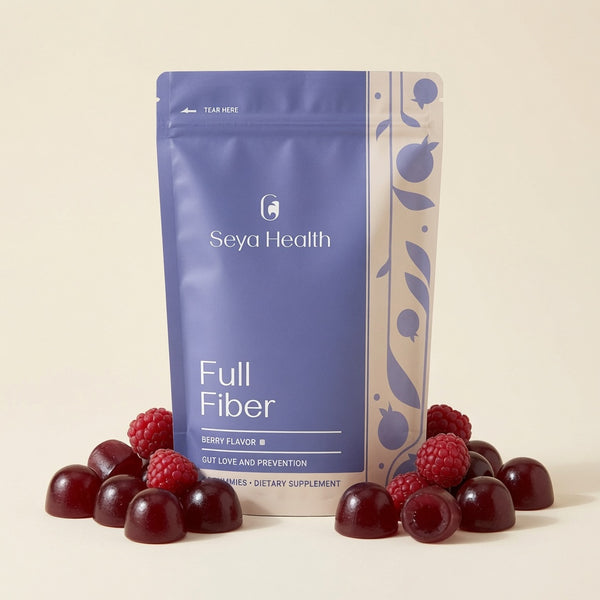
Seya Full Fiber
Your gut bacteria run on fiber. Seya Full Fiber delivers 6 grams from three fibers in one to feed the beneficial bacteria in your gut and support short-chain fatty acid production. Plant based, no gelatin, no sugar alcohols.
Shop Full FiberKeep reading

fiber
Can a Multivitamin Replace Vegetables? What Supplements Can't Do for Your Gut

constipation
The Best Way to Beat Constipation in Your 30s (and Where Fiber Gummies Fit)

fiber
The Gut-Skin Axis: Does Your Gut Health Affect Your Skin?
The gut-skin axis, explained: how your gut bacteria and blood sugar affect your skin, w...