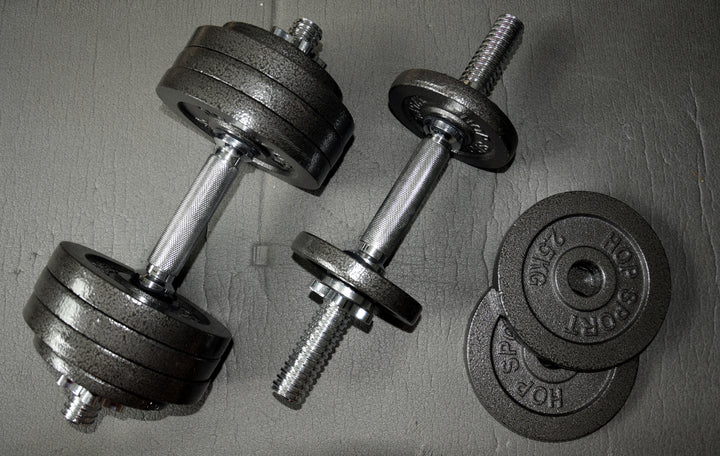
Does creatine and strength training work better together in menopause? Yes, but only as a pair. A 2026 review of 7 trials in 608 women after menopause found creatine added about 7.5 kg to leg-press strength. The gains showed up when women took 5 g or more a day and lifted. Low doses without lifting did nothing (Naddafha, 2026).
- The lifting does most of the work. Creatine adds a small extra on top.
- Dose in the trials: about 5 g a day, every day.
- Training in the trials: 2 to 3 sessions a week, with loads that rise over time.
- Perimenopause: no trial has tested it yet. The postmenopause data is the best guide we have.
Last updated November 2026.
You started lifting because everyone said muscle matters more after 40. Now you keep seeing creatine in the same posts. Is it worth adding, or is it just one more thing to buy?
Here is the short version. Creatine is not a shortcut. It is a helper that works when you train. Below we show how much it adds, why it does little on its own, and how the women in the trials actually trained.

Does creatine boost strength training results after menopause?
Yes, by a small but real amount. The best summary so far is a 2026 meta-analysis. It pooled 7 randomized, placebo-controlled trials in women after menopause. Their average age was about 62 (Naddafha, 2026).
Compared with placebo, creatine added:
- About 0.37 kg of lean mass. That is close to a pound of muscle and other lean tissue.
- About 7.5 kg on the leg press. That is roughly 16 pounds more on a one-rep max.
The authors called these gains small but meaningful. That is a fair label. Creatine will not double your results. It helps you squeeze a little more from each block of training. To see why, read how creatine fuels short, hard efforts.
Why does creatine do little without lifting?
Because creatine helps you train harder. If there is no training, there is little for it to help.
A Brazilian trial made this very clear. Sixty older women spent 24 weeks in one of four groups (Gualano, 2014):
| Group | Leg press gain | Arm and leg lean mass |
|---|---|---|
| Placebo, no training | +2.4% | -1.2% |
| Creatine, no training | +3.7% | +0.3% |
| Placebo plus training | +15% | -0.2% |
| Creatine plus training | +19.9% | +1.31% |
Look at the gap. Training alone took leg strength up by 15%. Creatine alone barely moved it. The paired group posted the highest numbers. Its lean-mass gain and its bench-press gain (about 10%) beat every other group, training alone included. On the leg press, the gap over training alone was too small to be sure.
The 2026 review found the same split. Trials that used 3 g a day or less without lifting showed no clear effect (Naddafha, 2026).
Not lifting yet? Creatine still has other uses that are being studied. Read creatine without working out for the honest picture.
What did the training look like in these trials?
Nothing extreme. Most women trained 2 or 3 days a week, on machines or free weights, and added load as they got stronger.
| Trial | Women | Training | Creatine | What changed |
|---|---|---|---|---|
| Aguiar, 2013 | 18, average age 65 | 3 days a week, 12 weeks | 5 g a day | More strength and muscle than placebo |
| Gualano, 2014 | 60 older women | 24 weeks | Creatine vs placebo | Best gains only with creatine plus training |
| Chilibeck, 2015 | 47, average age 57 | 3 days a week, 12 months | 0.1 g per kg a day | Relative bench press up 64% vs 34% |
| LIFTMOR, 2018 | 101, average age 65 | 2 days a week, 30 minutes, 8 months | None | Spine bone density up 2.9% vs down 1.2% |
Sources: Aguiar, 2013, Gualano, 2014, Chilibeck, 2015, Watson, 2018.
The LIFTMOR trial is worth a closer look, even though it did not use creatine. Women with low bone mass lifted heavy: 5 sets of 5 reps at more than 85% of their max. They did it under supervision, twice a week, for 30 minutes. Their spine and hip bone density held up better than the control group, and every physical test they took improved more (Watson, 2018). Heavy, careful lifting was safe and helpful for these women. Get coaching before you try loads like that.
A weekly creatine and strength training plan that mirrors the research
No trial handed out this exact plan. It is our summary of what the trials had in common. Ask your doctor before starting if you have bone loss, joint pain, or heart concerns.
- Lift 2 or 3 days a week. Leave a rest day between sessions.
- Pick 4 to 6 big moves. Think squat or leg press, a hinge like a deadlift, a push, and a pull.
- Start light and build. Add a little weight when the last reps feel easy. The trials all raised loads over time.
- Take about 5 g of creatine every day. Rest days count too. Read why rest-day doses matter.
- Give it 12 weeks. The shortest trials that showed gains ran about that long.
- Track your lifts, not the scale. Strength is the signal here.
Why the weights and not the treadmill? Our guide on how strength training differs for women explains why heavier loads matter more in midlife. For the belly-fat side of exercise, see menopause belly and exercise.
Can creatine help with muscle loss in perimenopause?
Possibly, but here we have to be careful. Every trial above enrolled women after menopause. No published trial has tested creatine plus lifting in women who are still in perimenopause.
What we can say: muscle and strength start to slip in midlife, and lifting is the main tool to slow it. Women also start with 70 to 80% lower creatine stores than men (Smith-Ryan, 2021). So there is a sensible reason to think creatine may help in your 40s too. It just has not been proven in that group.
A second 2026 review looked at women of all ages who took supplements while training. Supplements did not clearly add muscle mass. They did add a little upper-body and grip strength, mostly in the creatine studies (Chen, 2026). The authors made a key point: the exercise itself gave the reliable benefit.
Want to know more about muscle loss with age? Read what sarcopenia is and whether creatine slows muscle loss.
Will creatine make you gain weight in menopause?
Not fat. In the 12-week trial in women around 65, body weight and body-fat percentage did not change in either group (Aguiar, 2013). In the 24-week trial, fat mass did not differ between groups either (Gualano, 2014).
Some people do see the scale rise by a pound or two early on. That is mostly water moving into muscle, not fat. It tends to be larger if you start with a big loading dose.
Does creatine cause water retention?
A little, and it sits inside your muscles. It is not the puffy, under-the-skin kind of bloat many women feel in perimenopause. A steady 3 to 5 g a day keeps it small. Our full guide to creatine water retention covers how long it lasts.
What about bone?
The bone results are mixed. In the year-long Chilibeck trial, women on creatine lost less bone at the hip: 1.2% vs 3.9% on placebo (Chilibeck, 2015). But when the 2026 review pooled all the trials, bone density did not change overall (Naddafha, 2026).
So do not count on creatine for your bones. Heavy, progressive lifting has stronger support, as LIFTMOR showed. Bone density is a medical question, so talk to your doctor about screening and care.
Is it safe?
For healthy women, the trials found no warning signs. Side effects were mild and similar to placebo, and kidney markers did not change (Naddafha, 2026). Creatine can raise a lab value called creatinine, which can look like a kidney problem when it is not. Read creatine vs creatinine before your next blood test.
Ask your doctor first if you have kidney disease or take regular medication. For the wider safety picture, see is creatine safe for women.
Where Seya fits, honestly
Our creatine gummy is coming January 2027. It is not on sale yet, and we will not share its dose, price, or ingredients until the formula is final. Creatine supports muscle strength when paired with resistance training.* It is not a treatment for any disease. For the bigger picture on creatine in midlife, start with creatine for menopause or creatine for perimenopause.
*These statements have not been evaluated by the Food and Drug Administration. This product is not intended to diagnose, treat, cure, or prevent any disease.
Frequently asked questions
Does creatine boost strength training results after menopause?
Yes, a little. Pooled trials found about 7.5 kg more on the leg press and about 0.37 kg more lean mass than placebo. The gains came with 5 g a day or more plus lifting.
Will creatine make you gain weight in menopause?
Not fat. Trials in older women found no change in body fat. Any early gain is usually a pound or two of water in muscle.
Does creatine cause water retention?
A small amount, stored inside muscle. A steady 3 to 5 g a day, without a big loading dose, keeps it minimal.
Should you pair creatine with resistance training?
Yes. In trials, creatine alone barely changed strength. Creatine plus 2 to 3 lifting sessions a week gave the best results.
Can creatine help prevent muscle loss in perimenopause?
It has not been tested in perimenopause yet. Lifting is the proven tool. Creatine may add a small boost, based on trials in women after menopause.
Is Seya's creatine gummy available?
Not yet. It is coming January 2027. Seya's fiber gummy is the product on sale today.
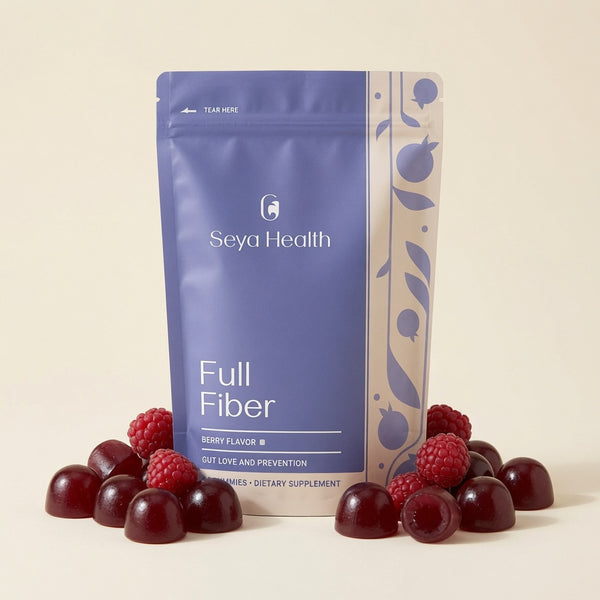
Seya Full Fiber
Most women fall short on fiber. Seya Full Fiber gives you 6 grams from three fibers in three small vegan gummies. Plant based, no gelatin, no sugar alcohols.
Shop Full Fiber